

With the growing emergence of natural and organic cosmetics, the world of cosmetic products has undergone a revolution in recent years.
Between pharmacy shelves overflowing with new products and brands and specialty store aisles offering “clean” products, it’s easy to get lost between these two terms.
More and more of you are looking for products that respect your health and the environment. And brands have clearly understood this.
So, is a natural product really safe?
How is a cosmetic product certified organic?
In this article, we will demystify the world of natural and organic cosmetics while exploring the essential aspects to consider when choosing them.
What is a natural cosmetic?
The movement in favor of natural cosmetics has experienced exponential growth, driven by increasing consumer demand.
For several years, you have been more attentive to the ingredients in your cosmetic products. Assisted by apps that, with a simple scan, tell you if the product is good or bad for your health. Driven by the desire for gentler products for the skin and respectful of the environment, many of you are turning to natural products.
However, it should be noted that the term "natural" is not strictly regulated, which can lead to products that appear natural but hide synthetic ingredients.
Thus, a natural cosmetic product must contain at least 95% ingredients of natural origin (ISO 16128 standard). But recognizing a natural product is not always obvious, as more and more products feature “green” packaging on our shelves.
Unfortunately, some brands engage in what is called greenwashing. They claim natural products while containing petrochemical derivatives, silicones, BHT, phenoxyethanol…
It is therefore crucial to remain vigilant against fake natural products.
To make informed choices, check ingredient lists and favor products with certifications from independent organizations such as COSMOS NATURAL® or SLOW COSMÉTIQUE®.
Don’t trust packaging that sometimes plays on a natural look to deceive you.
More than just a trend, natural cosmetics is a lifestyle. It favors plant-based ingredients and minimizes the use of potentially harmful chemical additives.
What is an organic cosmetic?
Organic cosmetics go even further by incorporating principles of sustainability and respect for nature. Organic cosmetic products must comply with stricter regulations than natural products.
To be certified organic, a product must be mainly composed of natural ingredients and be grown according to organic farming rules, without pesticides or chemical fertilizers. In the composition of an organic cosmetic, 95% of what can be organic must be so.
To make it easier to navigate, COSMOS® created a standard to harmonize the rules of different European certification bodies.
Here are the conditions for a product to be validated organic and carry the COSMOS ORGANIC® label:
- 95% of the ingredients must be natural
- At least 95% of the plants used must come from organic farming
- At least 20% of the entire formula must be organic (10% for rinse-off or mineral products)
The main difference between organic and natural cosmetics lies in the level of regulatory requirements.
An organic cosmetic is always natural, but not all natural products can be qualified as organic.
When you choose organic products, you opt for rigorous ingredient traceability and a guarantee of minimizing environmental impact.
How to recognize an organic cosmetic?
Recognition of organic cosmetics is often done through official labels issued by certification bodies. They indicate that the product meets high organic standards.
However, it is important to remain vigilant, as the market is unfortunately flooded with fake labels.
Make sure the label is issued by a trusted authority and be wary of products that seem too good to be true.
Here is a list of labels you can trust:
- ECOCERT®
- COSMEBIO®
- COSMOS ORGANIC®
Choosing a product certified by an organic label ensures a cosmetic free from controversial ingredients (sulfates, phthalates, mineral oils, endocrine disruptors), without synthetic dyes, as well as cultivation and manufacturing methods respectful of the environment and people.
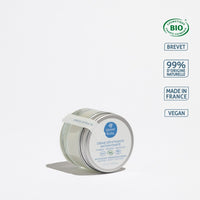
Organic at Laboratoire Graine de Pastel
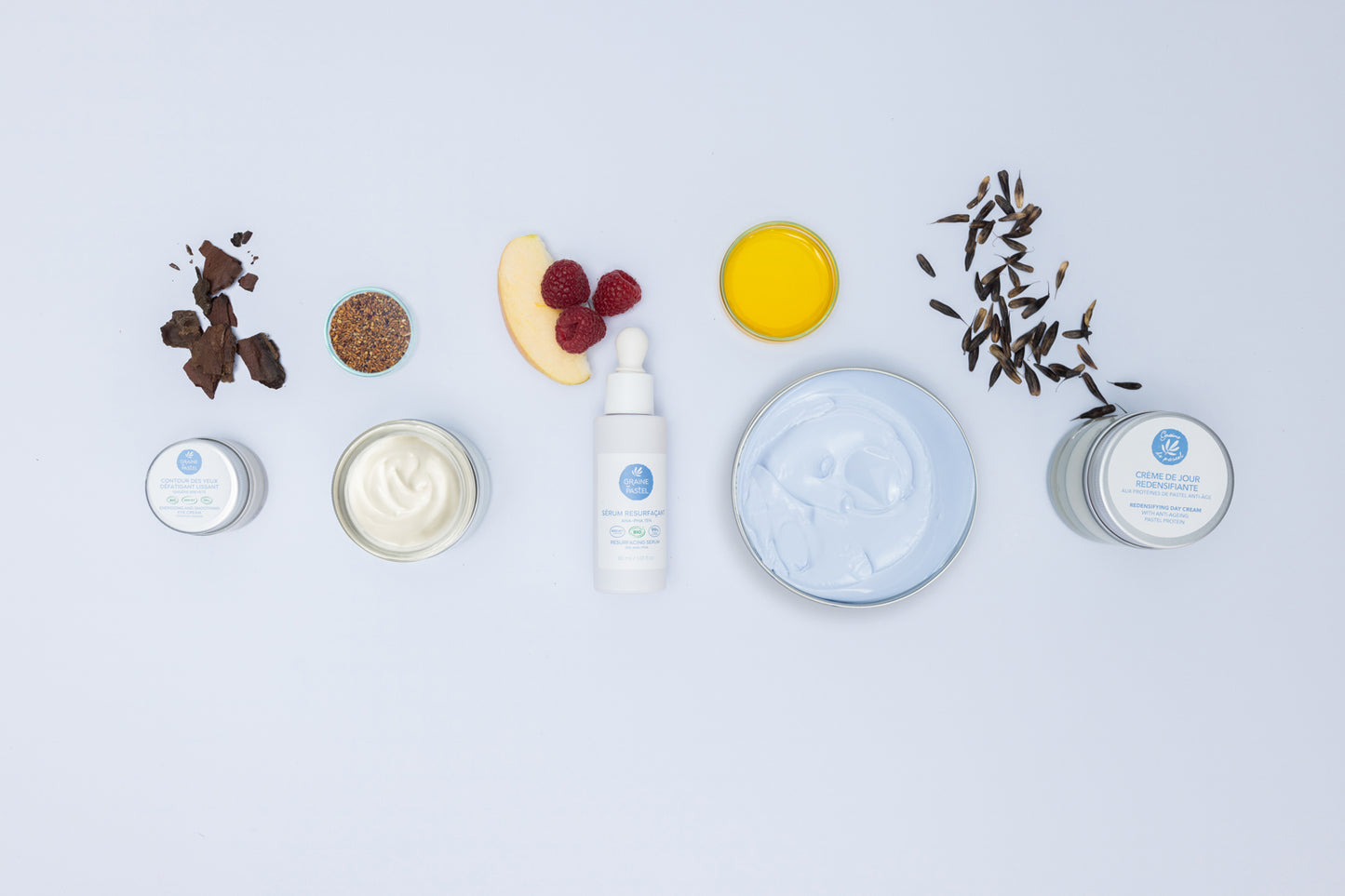
At the heart of this cosmetic revolution, Laboratoire Graine de Pastel stands out for its commitment to authentic and beneficial products.
The naturalness and safety of our care products are at the core of our approach.
An approach based on a demanding formulation charter:
- 100% French active ingredients
- at least 95% ingredients of natural origin
- no petrochemical derivatives

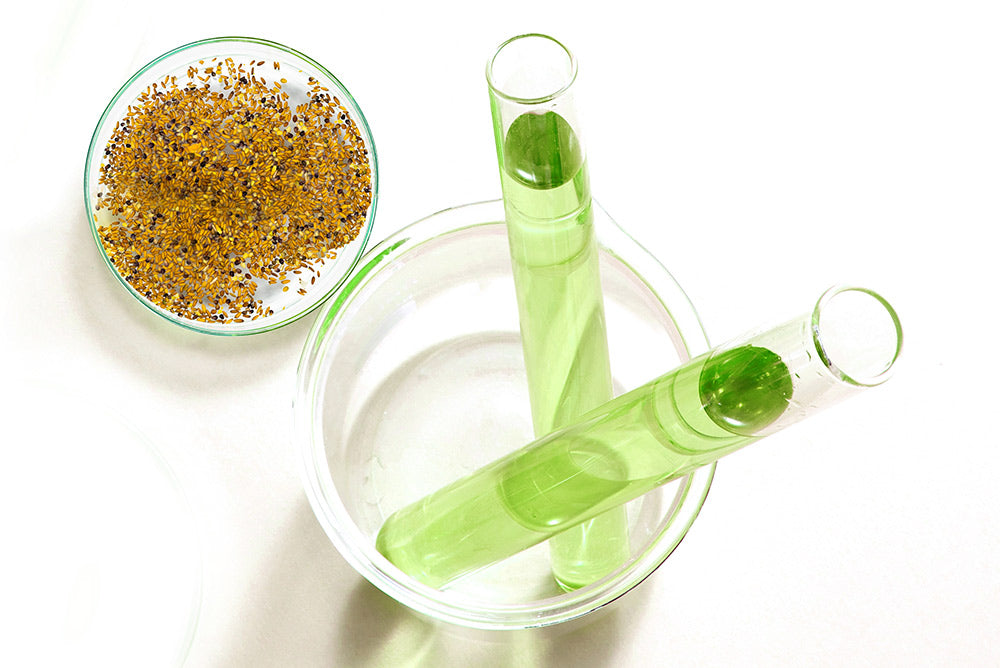
Our dedication to quality is reflected in our choices, such as purchasing 60 hectares of organic farmland in Gers. This approach guarantees full control over our plant actives as well as sustainable agriculture.
Moreover, Carole’s personal commitment, the founder, to agroecology on our own organic medicinal farm, demonstrates her passion for authenticity and ingredient purity.
The choice between natural and organic cosmetics is not always simple. However, by understanding the nuances between these two terms and paying attention to labels and certifications, you can choose products that are good for both your skin and the planet.
Our Laboratoire Graine de Pastel perfectly illustrates how choosing authentic and organic products can have a positive impact on our skincare routine and the environment.
It is an investment in our long-term well-being and the sustainability of our world.